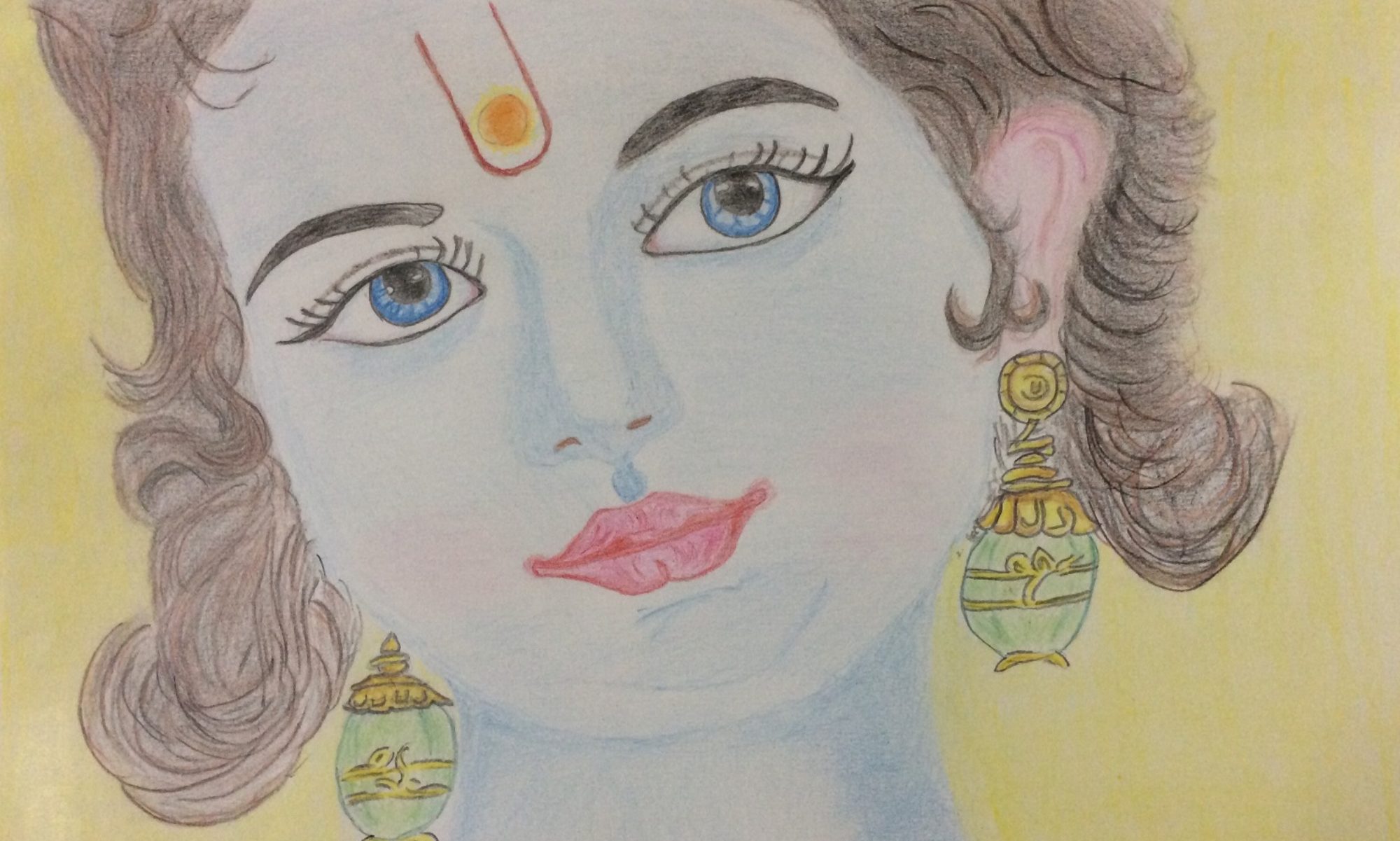
Ganapati Festive Stories – Day 6 – Dvija Ganapati

Celebrating Ganapati Festivals with Stories – Day 6 – Dvija Ganapati

The Epic of Dvija Ganapati – The Twice-Born Teacher of the Gods

Long ago, in the age when the Yugas shifted and chaos stirred the three worlds, there arose a mighty demon named Vidyunmali, son of the asura Tripurasura. Unlike other asuras who gloried only in brute strength, Vidyunmali sought to corrupt knowledge itself. He entered the sacred gurukulas disguised as a Brahmin and twisted the teachings of the Vedas, spreading pride, greed, and selfishness among students.

Soon, kings trained under him ruled with cruelty, priests performed sacrifices without devotion, and even sages quarreled endlessly over hollow words. The very essence of vidya (true wisdom) began to rot.

The devas rushed to Brahma, the Creator:
“O Lord, if knowledge itself becomes poison, then the worlds will perish. Grant us a remedy!”

Brahma closed his eyes in meditation, and the voice of Mahadeva echoed:
“Only the One who is both childlike and eternal, both scribe and sage, can restore balance. Call upon Ganapati.”

The Birth of Dvija Ganapati

Responding to their prayers, Ganesha manifested in a radiant new form. No longer the playful Bala Ganapati, nor the fierce Shakti Ganapati, but as Dvija Ganapati, the Twice-Born, resplendent with the marks of a Brahmachari and teacher.

  • His sacred thread (yajnopavita) glowed like lightning,
  • A staff (danda) symbolized discipline,
  • A kamandalu carried the water of purity,
  • A rosary (japa mala) gleamed in one hand,
  • And in his broken tusk, he still carried the pen that had once written the Mahabharata.

The devas bowed low. Vishnu himself said:
“Though we are gods, even we must sit at your feet now, O Twice-Born Teacher.”

The Asura’s Challenge

Vidyunmali laughed when he heard of this.
“What is an elephant-headed god but a beast? I have mastered the scriptures. I can twist the hymns to serve my will. No ‘twice-born’ god can outwit me!”

So he issued a challenge:
“If this Ganapati is truly the Lord of Knowledge, let him debate me. Whoever loses shall bow forever to the victor!”

The devas were afraid — for Vidyunmali was cunning, his tongue sharp as a serpent’s. But Ganapati accepted.

The Cosmic Debate

The debate was held on the banks of the river Saraswati. Sages, devas, and even nagas gathered to witness.

Vidyunmali thundered:
“The Vedas teach sacrifice for gain! Perform rites, and you will control the gods themselves!”

Ganapati smiled gently.
“The Vedas are not chains but wings. He who seeks only power from sacrifice is a slave of desire. True yajna is self-offering, the sacrifice of ego.”

The asura mocked him:
“Then why did even your father Shiva perform great sacrifices?”

Ganapati replied:
“Shiva’s sacrifice is eternal meditation. The fire altar is the universe, the ghee is compassion, and the offering is ignorance consumed by wisdom.”

His words struck like thunder. The devas cried out in joy, while the asura faltered.

The Asura’s Fall

In desperation, Vidyunmali conjured illusions of golden palaces, scriptures dripping with jewels, and students bowing before him.
“See!” he shouted. “This is true knowledge—glory, riches, followers!”

Ganapati only laughed, and with a wave of his hand, the illusions dissolved into dust.

He then raised his kamandalu, sprinkling drops of its pure water upon the earth.
Where the water fell, gurukulas bloomed again, children sat at the feet of true teachers, and wisdom flourished like fresh green shoots after rain.

At last, Vidyunmali, stripped of his pride, fell to his knees. The fire of falsehood burned away, leaving him hollow. Thus did arrogance in knowledge meet its end.

The Proclamation of the Twice-Born

The devas crowned Ganapati with the title Dvija – The Twice-Born Teacher of the Gods.

He declared:
“One birth is from the womb. The second is from wisdom. Without the second, the first is but an empty vessel. Therefore, seek your dvija-birth in truth, humility, and discipline. Only then is knowledge divine.”

And from that day onward, sages, students, and even the gods themselves first invoke Dvija Ganapati before learning, before chanting, before writing — for he is the eternal rebirth of wisdom.

✨ Thus ends the epic tale of Dvija Ganapati, who restored the sanctity of knowledge when it was corrupted, and who remains forever the patron of students, teachers, and seekers of truth.

Celebrating Ganapati Festivals with Stories – Day 5 – Shakti Ganapati

Day 5 – Shakti Ganapati (The Powerful Form)

The Epic of Shakti Ganapati and Sindhurasura

Long ago, in the Satya Yuga, when the earth was still young, the Asuras and Devas waged countless battles. Among the most powerful of the Asuras was Sindhurasura, born of a drop of blood spilled during a great war. His very name came from his complexion—red as vermillion, like the rising sun.

Sindhurasura performed severe penance to the Sun God (Surya), offering years of tapasya. Pleased with his devotion, Surya granted him a boon:

“No one in the three worlds shall defeat you, except an elephant-headed warrior of supreme shakti.”

Arrogant with his newfound power, Sindhurasura grew vast in size, as large as a mountain, and soon conquered the heavens. The Devas fled to Kailasa, where Shiva and Parvati sat in meditation.

The Plea of the Devas

Indra, Agni, and Varuna bowed before Mahadeva and Devi Parvati.

“Great Lord, Mother of the Universe,” they said, “we are helpless before Sindhurasura. His armies sweep across the worlds, his strength unmatched. Only the boon of Surya restrains him—but no such elephant-headed warrior exists!”

Parvati looked toward Ganesha, her beloved son. Though Ganesha was already revered as Vighnaharta—the remover of obstacles—he had yet to manifest the form that destiny required.

Shiva smiled knowingly.
“The time has come for the fusion of your energy, O Devi, with the wisdom of our son. From this union will arise a form beyond compare.”

The Birth of Shakti Ganapati

Parvati placed her palms upon Ganesha’s head, infusing him with her Shakti. A radiant light enveloped him, and he transformed into a golden-hued deity seated with two consorts at his side. One consort radiated Icchā Shakti (the power of divine will), and the other Kriyā Shakti (the power of divine action). With them, Ganesha became Shakti Ganapati, the harmonizer of power and energy.

His four arms bore sacred symbols:

  • A noose to bind arrogance,
  • A staff to destroy ignorance,
  • A lotus representing purity of purpose,
  • And the abhaya hasta, the hand of blessing.

Even the Devas were dazzled by his brilliance.

The Battle with Sindhurasura

Sindhurasura, now towering like a mountain of fire, laughed when he saw Shakti Ganapati approach.
“Little elephant-faced one! You think you can stop me? I have defeated Indra, Yama, even mighty Kubera! Your trunk and toys are no match for me.”

Shakti Ganapati remained calm. His two Shaktis stood beside him, glowing like twin flames, their energy flowing into him in waves of power.

The battle raged for days. Sindhurasura hurled mountains, but with a flick of his lotus, Ganesha dissolved them into dust. The Asura’s fiery arrows were caught by the noose and extinguished mid-air. When Sindhurasura charged like a maddened elephant, Shakti Ganapati’s staff struck the ground, splitting the battlefield and sending tremors across the three worlds.

The Defeat of Sindhurasura

At last, bound by the noose of wisdom, Sindhurasura fell to his knees. His arrogance melted away under the compassionate gaze of Shakti Ganapati. Unlike other gods, Ganesha did not slay him. Instead, he transformed the Asura with grace.

“Arrogance is but ignorance in another form,” Ganesha said. “Serve me, Sindhura, and your strength will uplift the worlds, not destroy them.”

Tears filled the Asura’s eyes. From that day, Sindhurasura became Ganapati’s eternal companion, standing beside him in temples and images, symbolizing the transformation of ego into devotion.

The Legacy of Shakti Ganapati

Thus was revealed the glory of Shakti Ganapati, the form of Ganesha where wisdom and power unite, where will and action harmonize. He is worshipped by those who seek strength, courage, and mastery over the ego. His victory over Sindhurasura teaches that true power is not in conquest, but in transforming darkness into light.

The sages declared:

“Where Shakti Ganapati dwells, enemies turn into allies, arrogance into humility, and obstacles into stepping stones of progress.”

✨ That’s why Day 5 of Ganesh Chaturthi is devoted to Shakti Ganapati—the golden lord with his Shaktis, who conquered the mighty Sindhurasura not by destruction, but by transformation.

Celebrating Ganapati Festivals with Stories – Day 4 – Veera Ganapati

Day 4 – Veera Ganapati (The Valiant Form)

The Epic of Veera Ganapati and the Mighty Mushikasura

In the celestial realms, there once lived a gifted musician named Krauncha, whose melodies were so sweet they could calm the fiercest storms and soothe the most troubled souls. But Krauncha’s talent was matched only by his overwhelming pride and greed. One day, while attending a divine assembly, his eyes fell upon a vessel containing the sacred nectar of immortality, a drink reserved for the gods alone. Overcome by a selfish desire, he stealthily stole and drank a few drops, believing he could gain eternal life and power.

Angered by his audacity and theft, the Divine Mother, who presided over the assembly, cursed him. “Your greed has made your heart as small as a mouse,” she declared. “From this moment forth, you shall be a mouse, a creature despised and hunted, yet your mind will remain that of a demon, filled with malice and ill will!”

Instantly, the musician’s form contorted, his beautiful hands becoming tiny paws and his body shrinking into that of a mouse. However, his mind, still filled with rage and cunning, made him an unstoppable terror. The now-demonic creature, known as Mushikasura, descended upon the mortal world, wreaking havoc wherever he went. He gnawed through the sacred texts in the hermitages, spoiled the harvests of hardworking farmers, and created an atmosphere of fear that prevented sages from meditating in peace. His tiny size made him impossible to catch, and his demonic strength made him a formidable foe.

The villagers and sages, desperate for relief, prayed to Lord Ganesha, who was residing in a tranquil forest nearby. Hearing their pleas, Ganesha rose to confront the menace. But he did not appear in his usual, gentle form. Instead, he transformed, his body swelling with divine energy. He appeared as Veera Ganapati, the Valiant Warrior, a sight that inspired both awe and courage. He stood with sixteen powerful arms, each one holding a different celestial weapon—a spear, a noose, a mace, and a thunderbolt, among others—each symbolizing a different tool for vanquishing evil.

The ground trembled as Veera Ganapati approached Mushikasura. The demon, emboldened by his own invincibility, charged forward, squealing with demonic fury. A fierce battle ensued, but Mushikasura’s speed and cunning allowed him to evade every strike. He zipped around Ganesha’s feet, trying to disarm him with bites and scratches. The other animals, who had been hiding in terror, now watched in stunned silence, their hopes resting on this valiant form.

Realizing that a traditional weapon would not work on such a tricky foe, Veera Ganapati did something extraordinary. He snapped off his own left tusk. The tusk, now glowing with a pure, white light, was no longer just a piece of bone but a missile of divine will. He hurled it at Mushikasura, and the tusk, imbued with his power, began to relentlessly pursue the demon.

Mushikasura, unable to escape the divine chase, finally fell to his knees in exhaustion. He had outrun every other force, but he could not outrun his own fate. Humbled and terrified, he surrendered to Ganesha and begged for mercy.

With a compassionate smile, Veera Ganapati looked down at the demon he had just defeated. Instead of destroying him, he blessed him. He transformed Mushikasura’s demonic energy into a powerful loyalty, and in an act of profound mercy, he declared that the mighty Mushikasura would become his eternal vahana, or vehicle. From that day on, Mushikasura, the once-feared demon, served as the loyal mount of Lord Ganesha, carrying him across the worlds.

✨ This story of Veera Ganapati teaches us that true valor is not just about defeating external enemies, but about conquering our own inner demons—our greed, our pride, and our ignorance. Just as Veera Ganapati tamed the demonic mouse, he gives us the strength and wisdom to transform our own negative qualities into tools for our own spiritual journey.


Celebrating Ganapati Festivals with Stories – Day 3 – Bhakti Ganapati

Day 3 – Bhakti Ganapati (The Devotional Form)

In the olden days, nestled between green fields and a flowing river, there lived the people of Sundargram. The village was blessed with fertile land, but peace was missing from their hearts. The farmers argued about water, the traders quarreled over money, and even during the grandest temple festivals, the villagers competed over who could offer the most lavish gifts to the gods.

One day, an old wise woman, Amma, sighed and said, “What use are all these offerings if our hearts are empty? The gods listen not to gold, but to love.”

That night, a radiant glow filled the temple. There, seated calmly upon a lotus, appeared Bhakti Ganapati, his gentle smile lighting the dark hall. In his four hands he held simple fruits—coconut, mango, banana, and a bowl of sweet modaks. The villagers rushed in, stunned by his beauty.

A proud merchant stepped forward with gold coins. “O Lord, accept my wealth and bless me,” he declared.
Bhakti Ganapati shook his head gently. “Wealth without love is but an empty shell.”

A farmer came next, with sacks of grain. “Lord, take this harvest, and bless my land.”
Again, Ganapati smiled. “Grain without gratitude is tasteless, my child.”

Finally, a little boy named Gopal stepped forward shyly, holding a small guava he had picked from a tree. “Lord, I have nothing else, but this fruit is for you.”

Bhakti Ganapati’s eyes glowed with joy. “This guava, offered with love, is worth more than gold and grain together.” He blessed Gopal, and the boy’s heart filled with warmth.

The villagers bowed their heads in shame, realizing their mistake. From that day on, they sang bhajans together, shared their food, and placed offerings of fruits and flowers before the Lord with hearts full of devotion. Peace returned to Sundargram, and Bhakti Ganapati watched over them with a smile.

Moral: True devotion does not lie in riches or rituals, but in love, sincerity, and unity of heart.

10 Stories for 10 Days of Ganesh Chaturthi

Day 2 – Taruna Ganapati (Youthful Ganesha)

Taruna Ganapati is a youthful form of Lord Ganesha, and is the second of his 32 forms. The name “Taruna” means young, new, or tender, and this form represents the freshness and blossoming of youth in all living beings.

TarunaGanapatiHe is depicted with a brilliant red complexion, like the mid-day sun, symbolizing his vibrant and energetic nature. He has eight arms, each holding a different object that carries a spiritual significance. In his hands, he holds a noose, a goad, a modaka (his favorite sweet), a wood apple, a rose apple, his broken tusk, a sprig of paddy, and a sugarcane stalk.

These objects together convey a message about the nature of youth and its potential. The goad represents leadership and the ability to move forward without constraints, while the noose symbolizes the capacity to win hearts. His broken tusk is a reminder of sacrifice and hard-earned wisdom. The sprig of paddy and sugarcane stalk represent provisions, wealth, and the sweet rewards of one’s labor.

Story of Taruna Ganapati (The Youthful Ganesha)

The Story of the Red Mango and the Young Weaver

 In the sun-drenched village of Dhanyapura, lived a young weaver named Kiran. He was known for his quick hands and sharp mind, but his heart was heavy with a constant worry. For years, a fierce, thorny creeper had grown around the village’s sacred banyan tree, its vines so thick and sharp they made it impossible to reach the sweet, red mangoes that only ripened once every decade. The mangoes were said to hold the very essence of youth and prosperity, but no one could break through the tangled thorns.

Kiran, like all the other villagers, had tried and failed. He had lost hope and felt the weight of his own youth being drained by the despair of this one impossible task. One night, as he sat by his loom, his mind drifted from the threads to the thorns. He thought of his strong hands, which wove intricate patterns, and how powerless they were against the creeper.

That night, in a dream, he saw a vision of Taruna Ganapati, the youthful Lord Ganesha with a brilliant, red complexion like the morning sun. He had eight arms, each one holding a different object.

“Why do you grieve, young one?” the deity asked. “Your youth is a gift, not a burden. Look at your hands, not for what they cannot do, but for what they can.”

TarunaGanapati-DreamKiran looked at the deity’s many arms. In one hand, Taruna Ganapati held a noose, not to bind, but to draw hearts closer. In another, a goad, not to push, but to guide a path forward. He saw a modaka, the sweet reward of life, a wood apple, symbolizing strength, and a rose apple, representing the simple joys of nature. He also saw a sprig of paddy, promising abundance, a sugarcane stalk, the symbol of sweet success, and in one hand, his own broken tusk, a sign of wisdom earned through sacrifice.

Taruna Ganapati smiled. “Each part of me, like each part of you, has a purpose. The path to the mangoes is not for a single hand, but for all of you working together. Your youthful energy is the key.”

Kiran awoke with a new clarity. The deity’s words echoed in his mind. The problem wasn’t the creeper itself, but their approach to it. He gathered the village youth and explained his vision. He told them about the noose, the goad, the paddy, and the sugarcane. The wisdom wasn’t in brute force, he said, but in a clever, coordinated plan.

The Tree - WorkingThey began. One young man, a blacksmith, forged a long, curved hook, like the goad, to pull the vines. A young woman, a farmer, used a long bamboo pole to push the thickest thorns aside, like a noose, creating a path. Another, a woodcutter, used a special tool to break off the toughest knots, a sacrifice of effort for a greater reward, just like the broken tusk.

Days turned into a week, and slowly, a narrow path was cleared. The thorns, which had once seemed an impenetrable wall, were now just obstacles to be overcome. Kiran himself, with his nimble weaver’s fingers, used a tiny knife to carefully snip away the final, most delicate thorns, just as he would with a tangled thread.

The Mango TreeFinally, they reached the heart of the banyan tree. There, on a low branch, hung the single, glistening red mango. They plucked it and divided its sweet, juicy pulp among everyone in the village, young and old.

The moment the flavor touched their tongues, the despair that had weighed on them vanished. A wave of joy and energy, like the red glow of Taruna Ganapati, washed over the village. The farmers felt their crops would flourish, the children felt a new sense of playfulness, and the elders felt their strength return.

Kiran looked at the empty spot where the mango had been. The path was cleared, but the memory of the struggle remained. He knew now that youth was not just a time of life, but a force of nature—brilliant, multi-faceted, and capable of overcoming any obstacle, as long as it used all its gifts. And he knew, deep in his heart, that the young god of new beginnings had blessed them all.

Taruna Ganapati is worshipped for good health, happiness, and joy, and is believed to remove obstacles. Worshipping this form of Ganesha is also thought to bestow beauty and youthfulness upon a devotee.

International Yoga Day – June 21st

The world celebrates 21st June as International Yoga Day. The common man’s interpretation of the word “Yoga” is that of meditation, spiritual, yogavarious physical exercises & postures for a healthy body & mind. While of course this is true, the word ‘Yoga’ has more to it than just the ‘asanas’.

Yoga is a much oft used word & has several meanings in different contexts. A direct Sanskrit translation of the word would show up as – “Yoga: Taken from the Sanskrit root –  ‘Yuj’ or to yoke; also means union”. This translation is indeed also correct. In common parlance, Yoga would mean to beget something due to a union of luck or good fortune. In astrology, Yogas are formed when a kendra lord and a trikona lord unite in a house indicating good or bad strengths to the native’s horoscope. The Bhagavad Gita refers to Gnyana Yoga, Karma Yoga & Bhakti Yoga as paths to be followed for one’s liberation. So, as we see the word Yoga has several contexts to it depending on where it is used.

In the context of celebrating the World Yoga Day, here we really refer to the Indian philosophical science of “Yoga”. Yoga is one among the ancient Indian principal schools of philosophy. The science of Yoga was established in detail in Rishi Patanjali’s treatise on the subject – Yoga-Sutra.  It is this ancient science that is really being celebrated here on the International Yoga Day. While Yogic practices have been well established even in the Vedic period, it was later that Patanjali systematized this knowledge into his popular book & that we are able to understand & use in our daily lives.

There are principally six Indian schools of thought or Philosophy, viz. Nyaya, Vaisesika, Samkhya, Yoga, Mimamsa & Vedanta. The subject, Yoga is thus a part of these series of Indian Philosophy and is often seen as a continuation of the Samkhyan school of philosophical thought. We often hear the word used along with Samkhya as ‘Samkhya-Yoga’. The Samkhya theory propounds the creation of the manifested universe due to the coming together of – Purusha, the conscious entity and Prakriti, the the unconscious principle & cause of the material world. The theory further states that the manifestation began with this union of Purusha & Prakriti, giving rise to “I”-ness (Ahamkara or Ego); Manasa (the Mind); the 5 Senses, the 5 Tanmatras and the Pancha-Mahabhutas.

The Yogic philosophical treatise continues to expound on the Samkhya theory that in order to live a peaceful, happy life and attain liberation, the Mind, Body and the Senses should be in a state of perfect harmony. It lays out a series of paths for a more harmonious, disciplined and contented life. The Yoga-Philosophy is therefore more than just bodily postures or asanas and has a much deeper and systematized knowledge, which one has to follow. Briefly, Yoga outlines an eight-fold path (Ashtanga Yoga) for a healthy living and liberation of the soul. These eight paths are:

  • Yama – Self Control
  • Niyama – Discipline in everyday life
  • Pranayama – Control of the breath and other vital life forces
  • Asanas – Physical postures for a healthy body
  • Pratyahara – Control of the senses
  • Dharana – Concentration
  • Dhyana – Meditation
  • Samadhi – Self-realisation

The first four of the above is what is commonly practiced today as “Yoga” and Yogic exercises. A complete understanding of this vast subject matter can be gained from the The Yoga-Sutra of Patanjali, which is considered as the reference text which gives in great details the Eight-fold Path for a more fuller living. This and several other ancient Indian texts are a rich collection of the vast philosophical knowledge that we had developed in those times. The celebration of this World Yoga Day helps to highlight our rich Indian knowledge wealth to the world.

Wishing everyone on the occasion of International Yoga Day! Happy Living!


Jupiter Transit 2021 – Kumbha Rashi

The planet Jupiter makes a move from his current position in the sign of Capricorn (Makara) to Aquarius (Kumbha) during the month of November ‘21. The transits of the slow moving Jupiter and Saturn are considered more important and is studied for their impact on the various Rashis. Jupiter is among the most benefic while Saturn may have malefic influences depending where he is positioned. Their movements across the Zodiac will most certainly bring changes to an individual’s life. While Jupiter moves a sign each year (every 12 months), Saturn takes about 2.5 years to move to the next Zodiac sign.

During November ’21, Jupiter transits from Makara to Kumbha. Makara is the sign where Jupiter is debilitated (Neecha) and hence at his weakest position. The move to Kumbha comes as a relief since he will move out of his debilitation. Although Kumbha is a sign ruled by Shani, the rashi can still be considered a better position compared to Makara since he will now be finally free from his debilitation sign.

Kumbha is the 11th sign of the natural zodiac and signifies ‘gains’. Being an airy sign, it represents philosophers and thinkers. Kumbha by nature upholds philosophical wisdom and the presence of the plant of wisdom, Jupiter, in this Rashi complements it further. Thus Jupiter’s move to Kumbha is generally good. The Kumbha Mela, one of the largest gatherings in the world, happens every 12 years, whenever Jupiter is in Kumbha along with certain other planetary positions (Read my earlier post on: Jupiter in ‘Kumbha’ & Vishu 2021).

Planetary transits of Jupiter & Saturn will varyingly impact every Rashi sign in a positive or negative way:


For the Rashis (Moon Signs) of Mesha, Rushabha, Mithuna, Vrischika & Kumbha Guru’s transit will be generally favorable

For the Rashis (Moon Signs) of Karkata, Tula, Dhanusha, Makara, & Meena Guru’s transit is not so favorable

For Simha & Kanya Rashi the transit is neutral and will have mixed effects.


In any case this year is an exception. Usually, as mentioned here above, Jupiter transits to the next rashi, every 12 months. However, this time, he will remain in Kumbha only uptil April 2022, ie. about 5 months only and will then move into Pisces. Hence the transit effects are much shorter. Guru’s move into Pisces (Meena Rashi) is even more beneficial since its his own sign and we will study the effects that this transit will have, when it happens in April next year.

Lastly, we should carefully note here that although each transit will give certain generic influences to each Rashi, the final result or impact on each person should be delicately studied by examining the native’s horoscopes at birth.

Happy Diwali

The Indian Festival of Lights

In Indian culture, every Pournima (Full Moon Day) holds a special significance and each Pournima is associated with a festival or a religious significance (Read the article on Pournima). Diwali, however, seems to be an exception.

The Diwali is perhaps the only major Indian festival to be celebrated on an Amavasya (New Moon Day). The Sun & the Moon are also called the ‘Luminaries’, or the providers of light. However, on the Diwali day, astrologically, they are probably not at their best positions. Not only is it an Amavasya festival, it is also the time when the Sun is debilitated in the sign of “Tula” or Libra and the New Moon joins him. As a matter of fact, it appears strange that the Festival of Lights is celebrated when the giver of Light, viz. Sun is at the sign of his debilitation and therefore weak & on a day when the nights are the darkest (No Moon night).

Why is it then that we chose these days to celebrate and why do we then call it the festival of lights? The rationale here seems to be that the universal soul or the ‘Atman’ is ever shining and is not affected by these temporary worldly occurrences. Besides, it is up to each one of us, to make the effort & strive to remove the darkness & ignorance and lighten up our lives. Diwali signifies that no matter how long the darkness lasts, truth and enlightenment always wins. This fact is supported by various myths & stories of Diwali – the return of Sri Rama from 14 years of Vanavaas, or the victory over the evil Narakasura and several other stories.

We therefore light up our homes and the cities with lamps, diyas, lanterns signifying that truth and enlightenment eventually wins over darkness and ignorance.

HAPPY DIWALI
May this Festival of Lights brighten our lives with Happiness & Peace!

Jupiter in ‘Kumbha’ & Vishu 2021

In Indian astrology, Jupiter holds prominence over all the planets, not only because he is generally a benefactor, but also because he is regarded as the Guru or Teacher and is known to impart knowledge and wisdom. Jupiter moves slowly along the Zodiac, and progresses by one sign each year. This year Jupiter makes a move to the sign of Aquarius temporarily in April where he will remain for a few months. Jupiter’s transit to the sign of Aquarius has great astrological importance in India.

Aquarius, or ‘Kumbha’ represents the pot. The pot is a carrier of water. In Indian mythology when the Samudhra Manthan was done, the Goddess brought forth the Amrita or ‘nectar of immortality’ in a pot (Kumbha). Thus Kumbha is of particular significance and variously represents the carrier of nectar, water or of other important things for the benefit of mankind. Thus when the planet of wisdom, Jupiter, moves into Kumbha, it is given importance since it implies that this pot of knowledge is available to those who are seekers. Thus also the myth, that when Jupiter moved into Aquarius, the nectar spilled from the pot into different places in India.

The Kumbha Mela is held once every 12 years, each time when Jupiter moves into Aquarius and the Sun is exalted in Aries. Sun represents the soul, so when the Sun is in Aries and exalted, and Jupiter is in Kumbha, the soul is fully open to receive the knowledge and get enlightened. The Kumbha Mela historically was an occasion when the Kings would meet his subjects and donate gifts and valuables. It was also an occasion when people would gather at the Ganges to wash away the sins and start afresh on spiritual learning and enlightenment.

Happy Vishu!!

Jupiter has already crossed over to Aquarius during April, while Sun moves into Aries on the Vishu day (Tamil New Year). Thus, this year’s Vishu is special. The Sun shines in Aries and the Jupiter transits to Aquarius. Inline with our tradition, lets wash away our past sins, all our troubles and start afresh on a journey and quest for spiritual knowledge and wisdom.

Vatapi Ganapati – The Place, Story and the Significance

We begin the year with the first Sankatahara Chaturthi of 2021. It is thus relevant to recall the legend associated with the place and the significance of the Ganesha idol of Vatapi.

Vatapi is a place in Karnataka and the capital of the kingdom of the Chalukyas. The place derives its name from the story of the asura having the same name (Read: The Story of Vatapi).

A Ganapati temple was soon after established here and the idol that originated from this place, is referred to as Vatapi Ganapati and is said to have been once worshipped by Sage Agastya, the slayer of the demon, Vatapi.

In the latter years, the region around Vatapi was ruled by the Chalukya dynasty and the Ganesha deity gained prominence thereafter as a remover of obstacles & bestower of boons. It is believed that this Ganesha idol was subsequently brought to the temples of Tamil Nadu from Vatapi after a conquest of the Chalukya kingdom. The idol now resides in a temple in Nagapattanam, Tamil Nadu.

This particular idol of the elephant headed God has four hands, holding a sugar-cane in one of his hands, and a broken tooth in another (with which he slayed Gajamukhasura) among other objects. The  lord in this form is known as a remover of obstacles & is revered by both Agastya and Lord Vishnu.

It is said that the legendary Sri Muthuswamy Deekshitar was so enamoured by the idol and composed a song in the praise of the Lord Ganapati of Vatapi. The song bears the reference – “Vatapi Ganapatim Bhaje”, which literally means, I pray to the Lord Ganapati of Vatapi. The song is one of Muthuswamy Dikshitar’s most prominent compositions and is very frequently sung at Carnatic music performances.

With this first Sankatahara Chaturthi of the year, we hope and pray the year 2021 is the year when all the obstacles facing us are removed and we have a peaceful and healthy year ahead.

HAPPY NEW YEAR, 2021!